10 travel films to watch before your next adventure
Travel on screen can mean crossing a continent by motorcycle, facing a trail alone, or joining a family in a van that barely survives the road. It can also mean missed trains, exaggerated stories, and plans going spectacularly wrong.
These ten films are not ranked. Each reveals a different way to move: through adventure, encounters, humour, memory, or the need to begin again. Pick the journey that fits tonight.

2004
The Motorcycle Diaries
Before becoming a historical figure, Ernesto Guevara was a medical student crossing South America with Alberto Granado. The motorcycle fails, money runs out, and improvisation takes over. Encounters along the way turn an adventure into a confrontation with the continent's inequalities.
It is about leaving with one idea of the world and discovering, kilometre by kilometre, that it is no longer enough.

2007
Into the Wild
Christopher McCandless leaves a comfortable life and heads towards Alaska. The images inspire adventure, but the film is no advertisement for escape. The same wilderness that promises freedom also exposes inexperience, isolation, and limits enthusiasm cannot erase.
Watch it for the pull of the road and for the warning that distance does not remove what we carry within us.

2006
Little Miss Sunshine
A family crosses the United States in a yellow van to take Olive to a children's pageant. The vehicle breaks, adults argue, and almost nothing follows the plan. Pushing the van to start it becomes a perfect image of how this family learns to keep moving together.
The journey does not change the destination. It changes how imperfect people choose to support one another.

2001
Spirited Away
Chihiro's move opens a passage into a world of spirits, unfamiliar rules, and unforgettable characters. Unable to understand its codes, she must observe, learn, and find the courage to act. Hayao Miyazaki turns disorientation into discovery and shows that adapting does not mean losing who you are.
1998
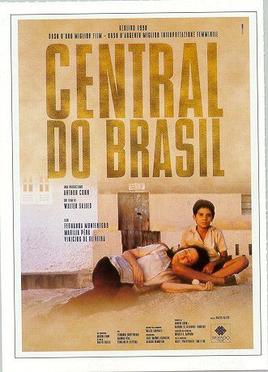
Central Station
Dora writes letters for people passing through Rio de Janeiro's Central Station. When she accompanies young Josué in search of his father, she leaves the station's anonymity and crosses Brazil's interior. The road does not fix everything; it creates enough time and space for affection to emerge.

2004
EuroTrip
After discovering that he completely misunderstood messages from a German friend, Scott crosses the Atlantic with his friends to find her. Their route through Europe becomes a deliberately absurd collection of borders, parties, mistakes, and bad decisions. Do not look for realism: this is an unrestrained teenage comedy.
Choose it when you want to remember that some trips become stories precisely because the itinerary collapsed on day one.
1997
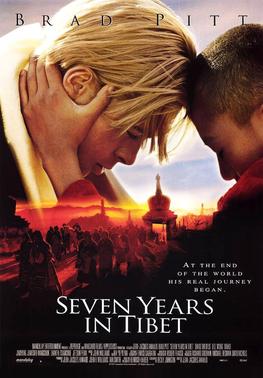
Seven Years in Tibet
Austrian mountaineer Heinrich Harrer leaves for the Himalayas driven by ambition, but the Second World War interrupts the expedition. After escaping a prison camp, he reaches Tibet and befriends the young Dalai Lama. His years in Lhasa confront his arrogance and alter his priorities.
Beyond the landscapes, the film asks what happens when a traveller stops treating a place merely as scenery for personal conquest.

2012
On the Road
Walter Salles's adaptation of Jack Kerouac follows Sal Paradise and the restless Dean Moriarty through roads, cities, and nights of jazz. The journey carries a desire to reject conventional life while revealing the damage caused by freedom without responsibility.
More than a route, it captures a generation's hunger for movement, and the difference between always leaving and actually finding somewhere.
2014
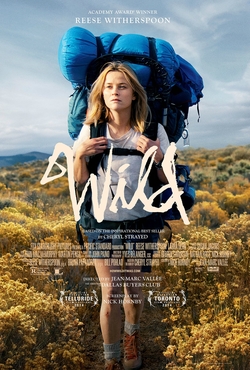
Wild
After her mother's death and a period of self-destruction, Cheryl Strayed sets out alone on more than 1,700 kilometres of the Pacific Crest Trail. She begins with little experience, an overloaded pack, and pain that makes every stage tangible. Walking does not erase the past; it creates the silence needed to face it.
With Reese Witherspoon in the lead, the film presents the trail as physical effort, grief, and reconstruction rather than an instant cure.
2003
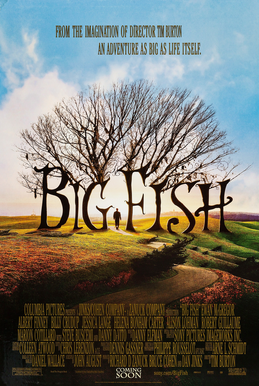
Big Fish
Edward Bloom has spent his life telling grand stories about the places he visited and the extraordinary people he met. His son Will, tired of the exaggerations, tries to separate fact from fantasy. He gradually understands that the stories may preserve a truth no exact chronology could hold.
Tim Burton expands the idea of travel: the story we choose to tell after returning can matter as much as the road itself.
Ten films, ten ways to move
The selection crosses South America, Europe, Tibet, and American roads, but distance is not the only measure. In every film, travel produces something: laughter, discomfort, closeness, growth, or a new way to tell the past.
Films can spark curiosity about a destination, but no place fits entirely on a screen. If a story makes you research a city or trail, excellent. Go without expecting to recreate its scenes.
Sources: Paramount Pictures: EuroTrip, Encyclopaedia Britannica: The Motorcycle Diaries, British Film Institute: Central Station, and reference pages for On the Road, Wild, and Big Fish. Retrieved 2026-07-19. Poster images are hosted by Wikimedia Commons.